

Dongyin Cloud Products | Luban PaaS: More Than Just a Low-Code Platform
Release time:
2023-04-19
Luban is not merely a low-code platform; it is a PaaS solution dedicated to the end-to-end supply chain domain. Built around the specific needs of this sector, it fosters a robust ecosystem, deepens industry‑specific capabilities, and delivers seamless, industry‑tailored services that span every stage—from business operations and technical development to production and IT operations. Luban’s four key attributes are low‑code adoption, industry specialization, integrated functionality, and automation.
This issue introduces the final product unveiled at this Dongyin Cloud launch—the Luban PaaS platform, which serves as the core technological foundation for Dongyin’s supply chain cloud solutions.
“With the technical support of Luban PaaS, our products can better serve enterprises and adapt to the diverse needs of different organizations.”
I. Four Key Features of Luban PaaS
Luban is not merely a low-code platform; it is a PaaS solution dedicated to the end-to-end supply chain domain. Built around the specific needs of this sector, it fosters a robust ecosystem, deepens industry‑specific capabilities, and delivers seamless, industry‑tailored services that span every stage—from business operations and technology to production and IT operations. Luban’s four key attributes are low‑code development, industry‑specific customization, integrated functionality, and automation.
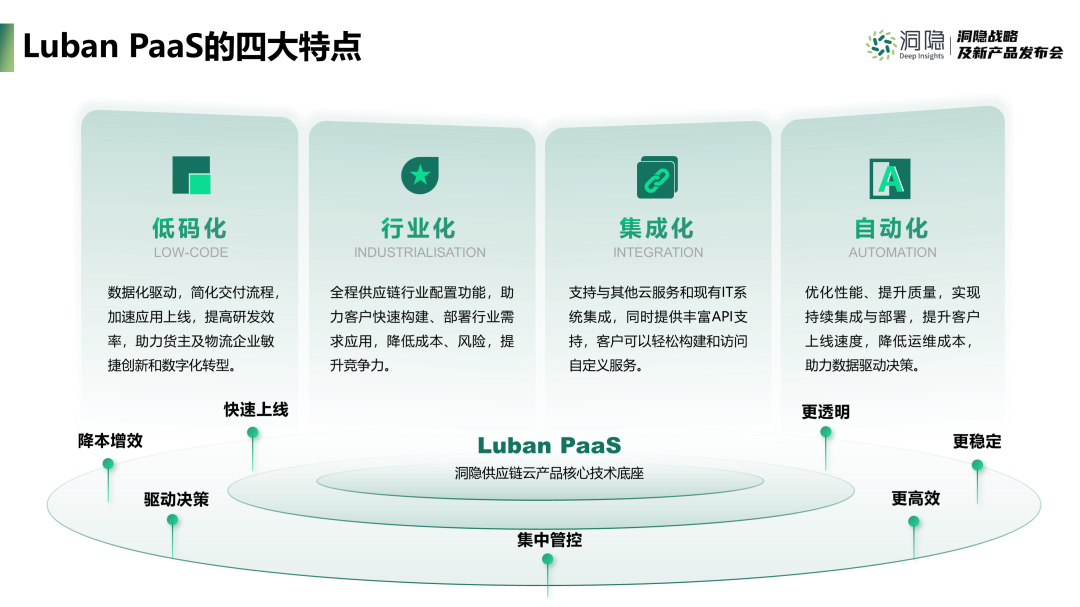
The Luban platform is a data-driven, low-code platform.
What is data-driven development? How does the Luban platform differ from other low-code platforms that generate code to drive application development?
First, data‑driven operation means that all applications built on the platform are powered by data that the platform can interpret. The application’s business rules, workflows, data structures, and data relationships are all represented as data within the platform. By leveraging its understanding of this data, the platform enables the applications to function. This approach opens up numerous possibilities and drives significant changes for supply chain products and customers:
1. Agile Delivery
On the Luban platform, requirements can be rapidly implemented and handed over to users for acceptance, eliminating the previously lengthy stages of documentation, development, testing, and deployment. Moreover, leveraging the platform’s industry‑specific template library and visual configuration capabilities, standardized applications can be swiftly built. Combined with the platform’s data integration and application integration features, this enables real-time data analytics and seamless integration with third‑party applications, delivering a true plug-and‑play experience.
2. Data Mining
Through data mining, the Luban platform can transparently expose an application’s data structures, workflows, and rules to users, enabling the application itself to identify areas for optimization. At the same time, users can seamlessly integrate with other business applications, rapidly launch new business lines, and smoothly align them with existing business processes.
3. Scalability
The Luban platform is data‑driven, and by intercepting and modifying data, it can support a wide range of extensions to meet evolving business needs.
4. Technology Stack Upgrade
By leveraging data-driven approaches, we decouple business logic from code, eliminating the need to embed business logic directly in high‑complexity code. This means that when the technology stack evolves, upgrading the underlying engine alone suffices to seamlessly migrate applications to the new platform—without disrupting existing operations. In other words, without being locked into a single technology stack, we can enhance the application’s lifecycle, performance, and user experience.
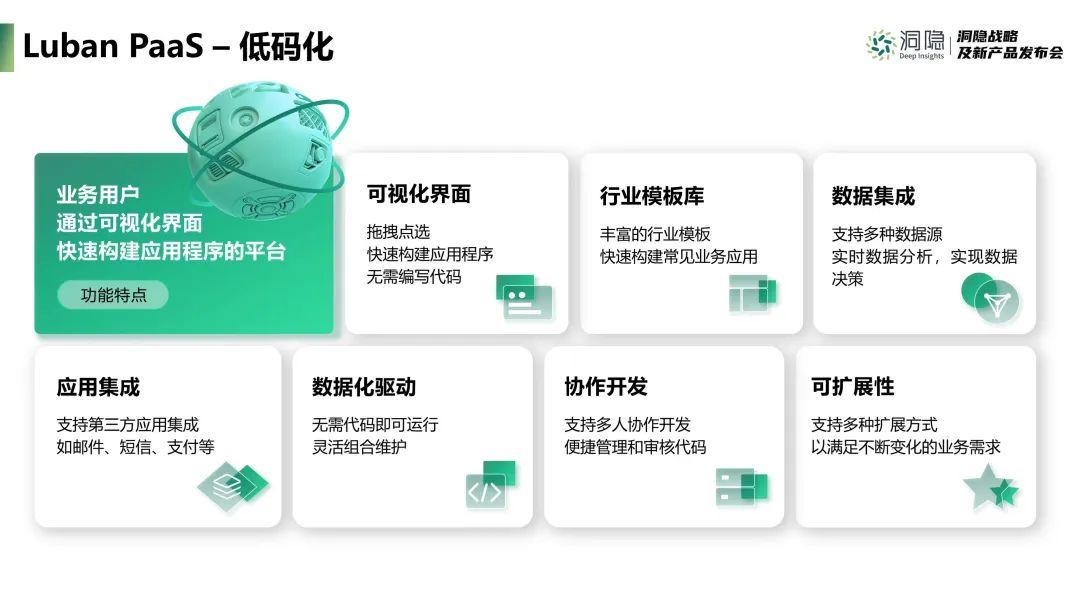
The industry-specific capabilities of the Luban platform reflect more than two decades of deep expertise and accumulated experience across the entire supply chain. It enables customers to rapidly build industry‑specific solutions, covering areas such as shipping, freight forwarding, compliance, international supply chain management, inventory, and transportation logistics. By providing templates tailored to the unique characteristics of each industry, the platform helps customers accelerate application development and deployment while delivering a superior user experience that aligns with industry standards.
By integrating industry-specific services, we help customers effortlessly implement domain‑specific capabilities—such as EDI, OCR, RPA, and electronic signing—streamlining business workflows, simplifying operations, and delivering tangible value to their end users.
At the same time, it provides support for compliance and security. As the importance of data security continues to grow in an increasingly globalized environment, industry-specific templates on the Luban platform help enterprises align with local regulations across domestic and international markets, thereby avoiding unnecessary losses.

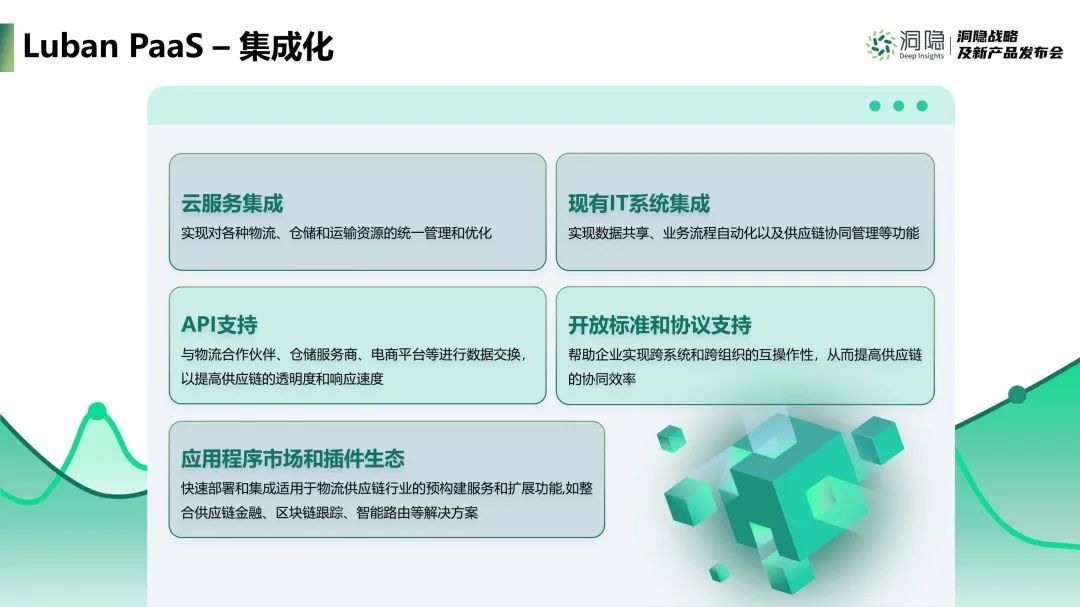
Integration involves using a service gateway to achieve business‑level coordination and integration between applications on the Luban platform and internal or external systems and services, for example:
01 Cloud Service Integration
Achieve unified management and optimization of diverse logistics, warehousing, and transportation resources.
02 Integration with Existing IT Systems
It enables functions such as data sharing across systems, business process automation, and supply chain collaboration management, as seen in ERP systems.
03 API Support
Exchange data with logistics partners, warehousing service providers, e-commerce platforms, and others to enhance supply chain transparency and responsiveness.
04 Support for Open Standards and Protocols
Helps enterprises achieve interoperability across systems and organizations, thereby enhancing supply chain collaboration and efficiency.
05 Application Marketplace and Plugin Ecosystem
Rapid deployment and integration of pre-built services and extended capabilities tailored for the logistics and supply chain industry, such as integrated supply chain finance, blockchain-based tracking, and intelligent routing solutions.
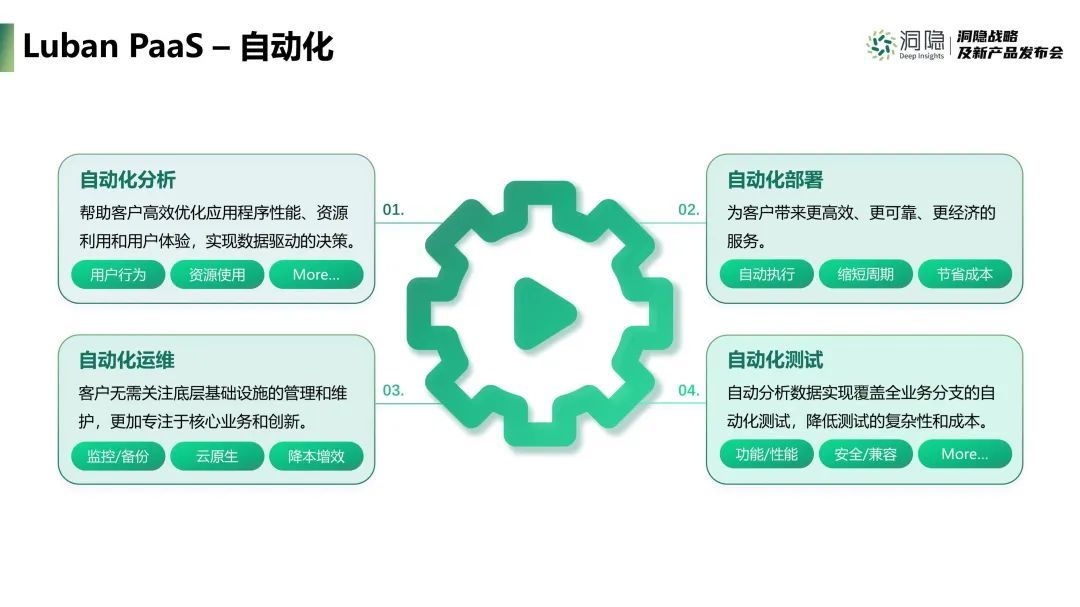
As mentioned above, data-driven approaches unlock numerous possibilities, and automation is one of their key value drivers, which can be divided into four components.
1. Automated Analysis
Automated analysis achieves self‑optimization and enhancement of applications by analyzing application‑level driver data in conjunction with real‑world business operation requests, such as performance tuning:
■ Optimize index combinations based on the frequency and patterns of user operations, thereby improving database execution efficiency.
■ Automatically detects risks based on the response time of user‑requested APIs and data‑processing logic, and provides configuration‑optimization recommendations—for example, when circular database or API calls occur—thereby improving operational efficiency.
■ Based on configuration data and inter-service call‑chain analysis, identify potential transaction inconsistencies, issue timely alerts to correct errors, and prevent data anomalies.
■ By conducting multi-dimensional analysis and comparison of configuration data, user behavior data, and monitoring data, the system dynamically assesses its operational status, continuously provides customers with optimization recommendations and risk alerts, and ensures that the system remains in optimal condition at all times.
2. Automated Deployment
Automated deployment works by performing incremental analysis of configuration data, enabling the Luban platform to determine which application‑specific upgrades are required and what operations need to be carried out—such as creating tables, updating or adding fields, introducing new applications, installing new plugins, integrating new services, and so on. It then translates these steps into a secure, automated workflow that automatically backs up relevant data and generates rollback scripts before execution, allowing for rapid recovery in the event of an error.
During upgrades, phased rollout ensures a seamless user experience while minimizing risks. This provides customers with robust stability throughout rapid business iterations, delivering services that are more efficient, reliable, and cost‑effective.
3. Automated Operations and Maintenance
Automated operations and maintenance refers to the Luban platform, which leverages the conveniences of cloud-native technologies to relieve customers from managing and maintaining underlying infrastructure, enabling them to focus more on their core business and innovation.
The Luban platform automatically scales resources up or down based on real-time monitoring data, enabling elastic handling of peak traffic. Leveraging microservice governance capabilities, it seamlessly redirects traffic away from failing nodes and restarts them, while applying rate limiting and isolation to problematic interfaces, thereby minimizing impact on customers.
4. Automated Testing
In the past, UI automation was difficult to implement in projects because the costs of development and maintenance were prohibitively high, and its benefits often lagged behind. It could only be deployed once the system had stabilized, which significantly diminished its value.
Meanwhile, the Luban platform can automatically analyze application configuration data to identify the operational conditions of business processes, thereby generating automated test scripts that cover all business branches, thus reducing testing complexity and costs.
As business functionalities are configured on the platform, the UI automation test scripts are generated in parallel. Moreover, the test case documentation produced by the platform enables identification of potential interruptions or missing branches in the workflow, helping customers refine and optimize their processes.
II. Luban PaaS Application Cases
Case One: A Leading Container Shipping Enterprise
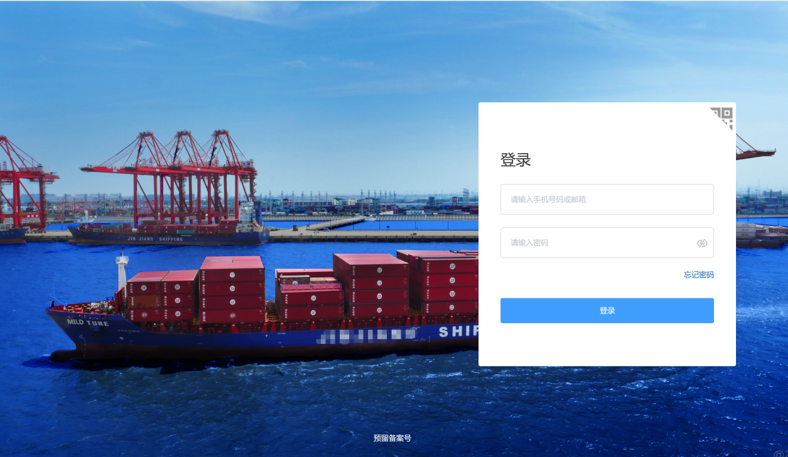

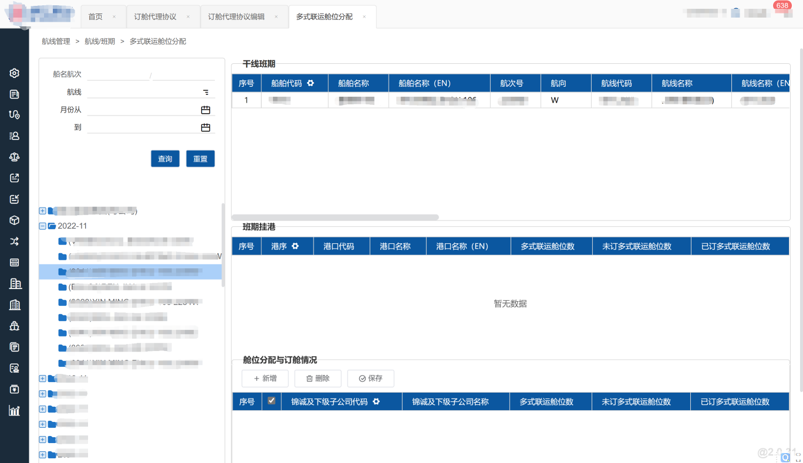
■Helped enterprises build a service mid‑end platform.
■ Leverage mature industry components to rapidly build standardized workflows.
■ Leverage low-code development capabilities to rapidly deliver customizations.
■Integrated industry services enable seamless connectivity among ports and customs authorities.
Case Study 2: A Bulk Trading Enterprise
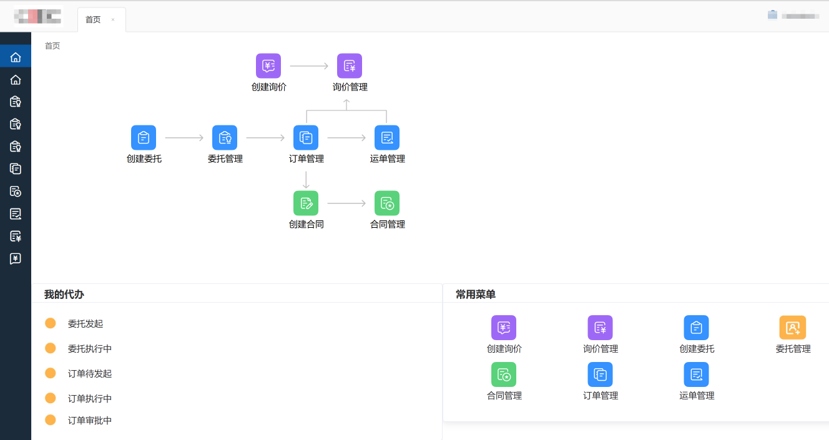
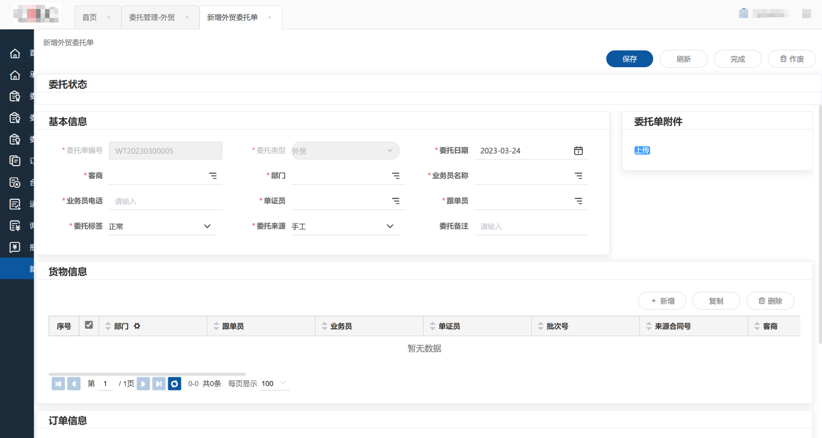
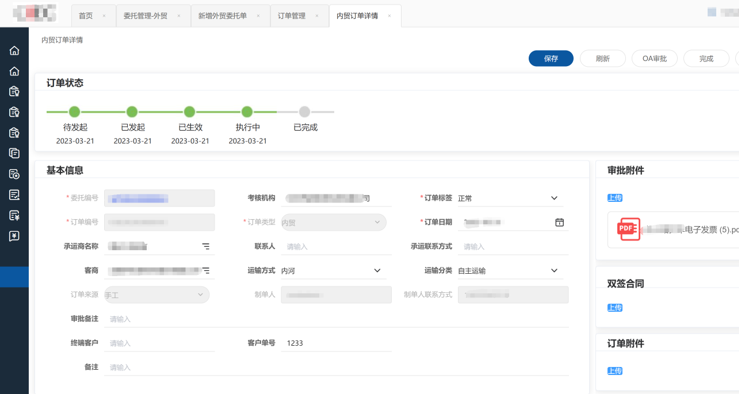
■By integrating with SaaS platforms, it enables agile business deployment while leveraging PaaS to develop custom modules, thereby combining the strengths of both SaaS and PaaS.
■ Leverage a PaaS platform to rapidly integrate industry-specific services, enabling end-to-end visualized tracking.
That concludes our overview of the Dongyin Cloud product lineup. Moving forward, we will delve into real-world application outcomes and value propositions of the Dongyin Integrated Supply Chain Cloud Platform and industry-specific digital solutions, tailored to diverse sectors and business needs. Stay tuned!
Tag:
Related News

undefined
Trying and Experiencing Immediately.

 Products
 Solution
 Resource
 About Us
Sales Hotline
+86-400-107-7860
Address: Room 1201, Urban Construction International Building, 500 Fushan Road, Pudong New Area, Shanghai
E-mail:info@deepinsights.com.cn
Service Line:+86-400-107-7860

Follow Us

Join our community