

How can shipping companies stop making decisions on a whim? This company has the secret.
Release time:
2025-08-19
Amid mounting challenges—frequent tariff fluctuations, increasingly stringent environmental regulations, and growing supply-chain uncertainty—the global shipping industry faces a critical imperative: controlling operating costs and enhancing efficiency have become the cornerstone of shipping companies’ survival and growth.
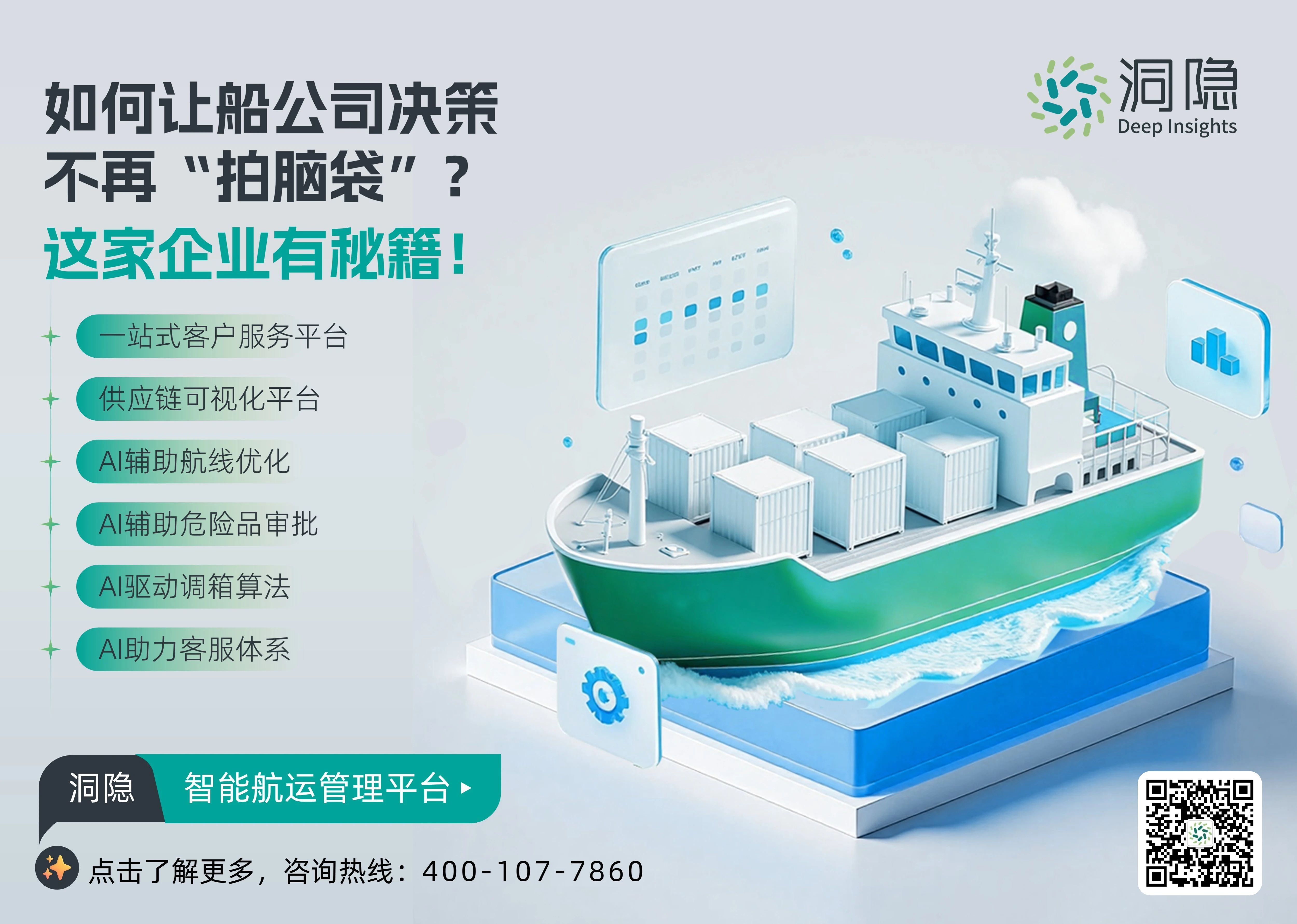
Dongyin Technology seamlessly integrates AI and big data technologies to deliver end-to-end digital intelligence solutions, helping shipping companies achieve efficient, transparent, and intelligent supply chain management.
Amid mounting challenges—frequent tariff fluctuations, increasingly stringent environmental regulations, and growing supply-chain uncertainty—the global shipping industry faces a critical juncture. Under these conditions, cost control and efficiency enhancement in vessel operations have become central imperatives for the survival and sustainable growth of shipping companies.
The shipping industry is a quintessential long‑chain, multi‑stakeholder sector, involving dozens of participants—including shippers, freight forwarders, shipping lines, ship agents, ports, customs authorities, warehousing providers, and inland transport operators—each operating with its own independent data systems. This intricate chain complexity and systemic silos pose significant challenges to the industry’s digital transformation, including fragmented data, low efficiency, rising costs, and difficult-to‑manage risks. Meanwhile, digital technologies driven by artificial intelligence, with their deep integration and innovative applications, are injecting fresh momentum into the sector, helping it break through these bottlenecks and reinvent its competitive edge.
As a digital supply-chain service provider for the shipping industry, Xiamen Dongyin Yunlian Technology Co., Ltd. (hereinafter referred to as Dongyin Technology) leverages “digitalization + AI” as its core driving force. Building on the SaaS‑based delivery of its products, it has seamlessly integrated artificial intelligence (AI) and big data technologies to deliver groundbreaking innovations. These advancements not only inject new momentum into shipping companies, enhancing operational efficiency but also, through their technological reach, break down collaboration barriers within the industry, thereby empowering the entire process of digital and intelligent transformation in shipping.
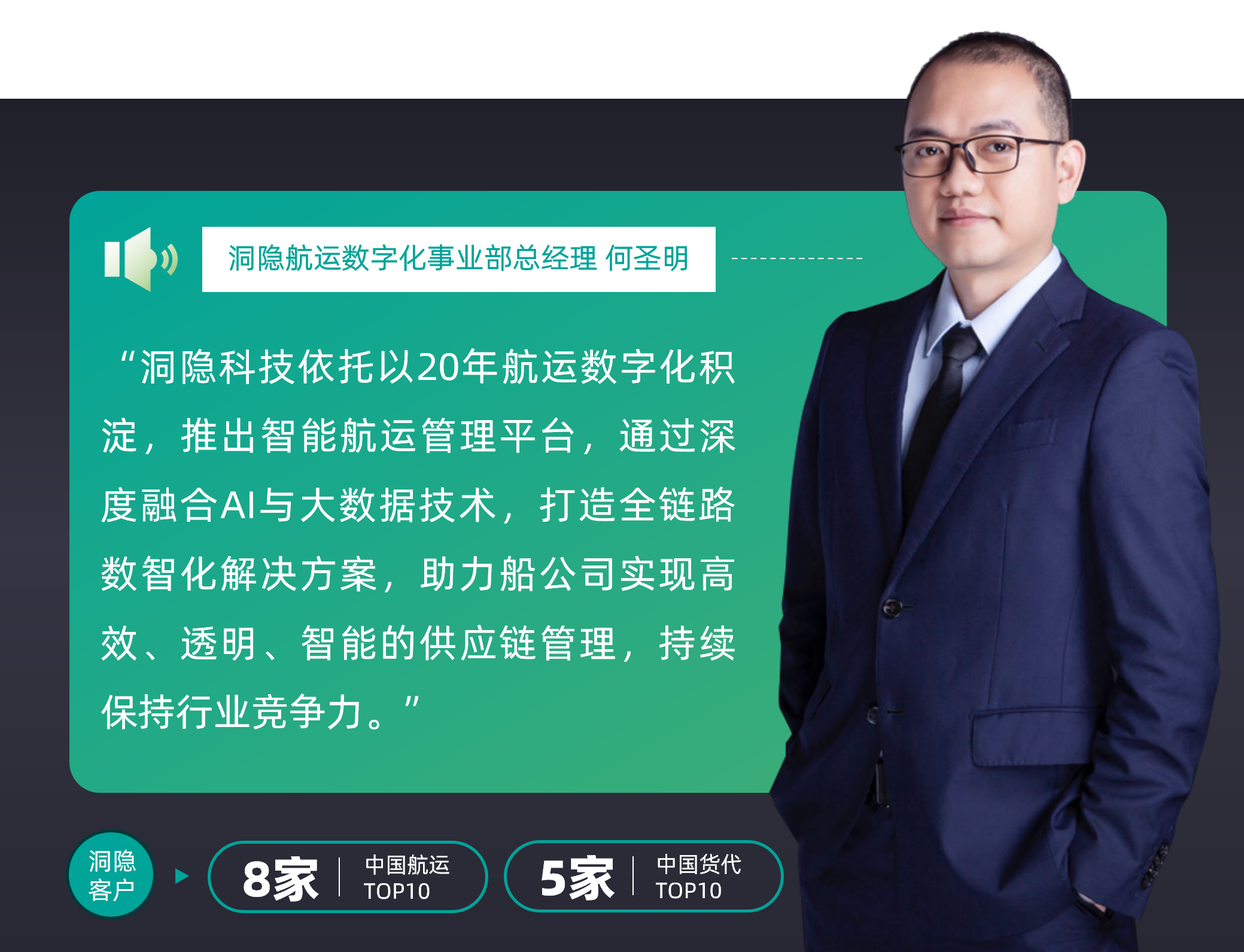
He Shengming, General Manager of the Digital Shipping Division at Dongyin Technology, stated in an interview with a reporter from China Shipping Weekly:
Strengthen the resilience of the supply chain.
Addressing the pain points of digital transformation in the shipping industry, Dongyin Technology’s “Intelligent Shipping Management Platform” offers a comprehensive, end-to-end solution for container shipping companies at the startup, transition, and mature stages, covering both digital infrastructure development and intelligent upgrades. Covering the entire end-to-end process—from cargo booking and stuffing to transportation and delivery—enabling full‑chain digital integration and intelligent decision‑making support. Ultimately, it helps enterprises achieve synergy and transparency, cost control, and competitive advantage.
Specifically, in Data interoperability This critical component, as one of the products in Dongyin Technology’s “Intelligent Shipping Management Platform” series, “Supply Chain Visibility Platform” It plays an important role.
He Shengming told our reporter that the global port‑yard data‑interconnection component of the “Supply Chain Visualization Platform” has already been linked to and integrated with data resources from more than 150 ports, over 300 terminals, and more than 600 container yards worldwide. With this solution, Dongyin Technology can obtain real‑time information on container transport status, precise locations, and other critical metrics. Thanks to continuously updated container‑status updates, the entire transportation process becomes clearly visualizable, providing a solid scientific basis for shipping companies’ subsequent decision‑making.
In addition, the “Supply Chain Visibility Platform” is playing a pivotal role in reshaping supply chain resilience, delivering unique value. He Shengming emphasized: “By integrating multimodal transport data—covering ocean, air, rail, and road—we enable end-to-end tracking of goods from origin to delivery, making the supply chain far more transparent. This not only helps companies stay abreast of shipment status in real time but also allows them to anticipate and mitigate potential risks proactively, thereby strengthening supply chain resilience.”
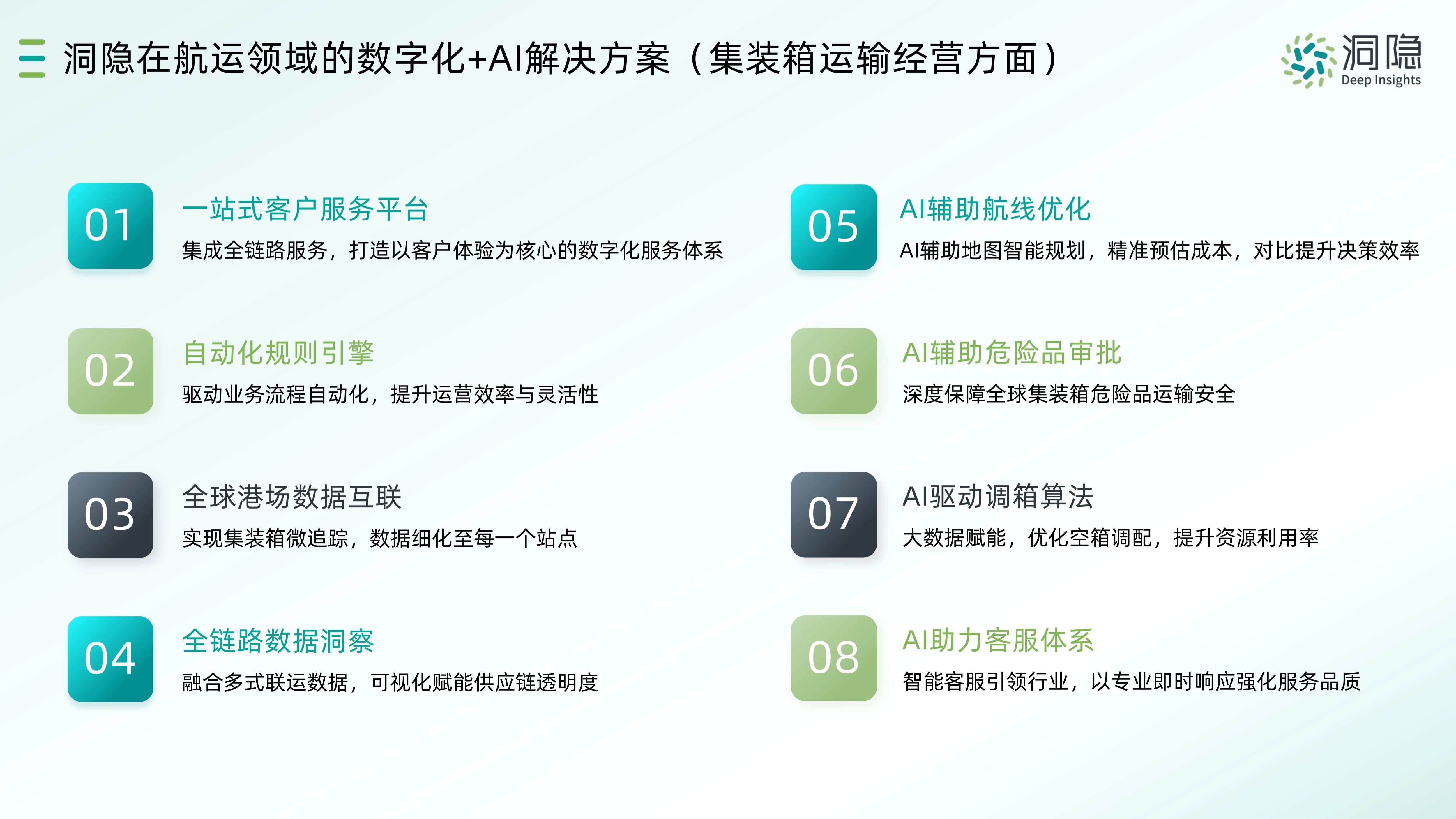
Regarding efficiency improvements, he stated that under the traditional model, the booking process is cumbersome, requiring multiple rounds of manual review and feedback, resulting in low efficiency and a high likelihood of errors. Dongyin Technology provides shipping companies with… “One-Stop Customer Service Platform” Its rapid development capabilities and end-to-end service integration enable the creation of a customer‑experience‑centric digital service ecosystem. Meanwhile, leveraging the automated rule‑based expertise accumulated in its automation engine for container logistics, it streamlines complex logistics workflows, drives business process automation, and enhances operational efficiency and agility.
In terms of cost and risk management, the AI tools integrated into Dongyin Technology’s digital products help shipping companies promptly gain insights into market dynamics.
Among them, AI-Assisted Route Optimization By conducting multidimensional analysis of variables such as fuel prices, meteorological data, and port congestion, it accurately forecasts transportation costs and transit times, swiftly generating optimal routing plans. “AI-Driven Container Allocation Algorithm” By accurately forecasting shipping lines’ trade volumes and container demand at each port, and by conducting in-depth analyses of historical data, market trends, and seasonal variations, we can implement dynamic container repositioning, effectively reducing the dwell time of empty containers and thereby lowering operating costs at the source. “AI-Assisted Hazardous Materials Approval” The system leverages AI to interpret hazardous‑material information, automatically parse documents, and conduct compliance checks across multiple jurisdictions, generating risk assessment reports and approval recommendations. This effectively addresses the challenge of uncontrollable risks in the shipping industry, ensuring safe transportation.
From data integration to efficiency gains, and from cost optimization to risk management, Dongyin Technology leverages “digitalization + AI”–driven solutions to address the key challenges of digital transformation in the shipping industry, fostering a new ecosystem of collaboration, efficiency, and security.
Engine-Driven Intelligent Decision-Making
The true “watershed” of digitalization lies not in going live, but in enabling data to “think.” For shipping companies, even the slightest deviation in route planning can translate into substantial cost disparities. The ability to convert tens of millions of variables into optimal routes in real time will directly determine a company’s profitability—and, in some cases, its very survival.
Dongyin Technology leverages a dual-engine approach—digitalization and AI—to elevate decision-making from post-event retrospection to proactive prediction. Throughout this process, achieving a three‑stage transformation—from “business digitalization” to “operational automation” and finally to “intelligent decision‑making”—is of paramount importance.
According to He Shengming, Dongyin Technology’s digital solution—combining an “automated rules engine” with AI—can help shipping companies achieve a three‑level leap in transformation. Specifically, during the phase of digitizing container logistics operations, Dongyin integrates data across processes such as transport order processing, document management, and cargo tracking, enabling real-time information sharing and collaboration. In the subsequent stage of operational automation, the automated rules engine allows the system to automatically handle key tasks, including booking processing, document management, cargo tracking, and exception handling.
In the intelligent decision-making phase, by analyzing vast amounts of historical and real-time data, the system can provide shipping companies with smart decision‑making recommendations—such as optimizing transport routes and strategically allocating capacity—helping them reduce costs.
He Shengming stated: “The key to successfully transitioning from informationization to digitalization and ultimately achieving intelligent operations lies first in integrating data across the entire supply chain—connecting shippers, freight forwarders, shipping lines, ports, customs authorities, and inland transportation providers. Second, it requires embedding digital technologies into real-world use cases and ensuring they take root. Finally, it calls for the deep integration of AI technologies. In Dongyin Technology’s efforts to help shipping companies achieve a three‑tier leap in business digitalization, adopting a dual‑driven approach that combines AI with an automated rules engine is particularly critical.”
“In this way, the automated rules engine can address 80% of the uncontrollable factors and manual‑operation challenges in real‑world transportation operations, while the remaining 20% of complex issues can be handled with AI, thereby creating an efficient, collaboratively integrated technological闭环.”
He believes that artificial intelligence is currently advancing at an astonishing pace, with AI technologies steadily permeating every sector and transforming decision-making processes—once reliant on human expertise—into data- and algorithm-driven intelligent recommendations. Looking ahead, the core value of AI will be concentrated in two key dimensions: first, a quantum leap in customer service experiences; and second, the ability to respond swiftly and precisely to customers’ diverse needs.
Based on this, Dongyin Technology has positioned its products in the field of capacity optimization for shipping companies, focusing on the complex context of container transportation and developing core capabilities in “intelligent route planning.” By integrating multi-dimensional data—including freight rate fluctuations, meteorological information, port congestion levels, transit times, and costs—Dongyin conducts comprehensive analyses to swiftly present shipping companies with the optimal route combinations. Currently, the company can accurately forecast costs and transit times across various shipping routes and offer comparative options for multiple transport paths, providing decision-makers with the most efficient solutions and enabling a qualitative shift from ad hoc, intuition‑driven decision‑making to data‑driven, evidence‑based strategies.
Anchor key nodes in the shipping industry
Precisely aligning with specific application scenarios is the key to the success of AI projects in the shipping industry. Dongyin Technology firmly believes that only by embedding AI into the “bottleneck” nodes of the shipping supply chain can intelligence truly deliver tangible value. Multiplier effect 。
According to He Shengming, the AI solutions developed by Dongyin Technology have already been deployed at multiple critical junctures within the shipping industry. Among these, Smart Customer Service It is one of the most widespread applications of AI, breaking the time constraints of traditional online customer service by providing 24/7 uninterrupted support and addressing issues such as slow response times and low efficiency. Currently, it has delivered significant results across numerous shipping companies. In addition, AI‑powered container repositioning is widely used in empty‑container management within the shipping industry, while the hazardous‑materials approval assistant has proven particularly popular among small and medium‑sized shipping enterprises.
From the perspective of AI’s value, He Shengming believes that the key to Dongyin Technology’s products lies in transforming the expertise of seasoned shipping professionals into replicable, standardized capabilities. “This is precisely the underlying logic behind Dongyin Technology’s AI offerings. This transformation holds significant implications for shipping companies of all sizes.”
He explained that, for major shipping companies, risk management has long relied on specialized teams and seasoned experts—expertise that can be lost due to staff turnover. To address this challenge, Dongyin Technology has integrated global regulations and standards for hazardous materials, accident analysis reports, and a wide range of compliance data, building and continuously refining an in-depth knowledge base. This enables Dongyin Technology to perform AI‑driven intelligent interpretation of hazardous‑material information, automatically generate risk assessment reports, conduct compliance checks, and provide approval recommendations, thereby significantly reducing shipping companies’ overreliance on individual expertise.
For some shipping companies, insufficient capacity previously deterred them from handling dangerous goods, or exposed them to significant risks when they did take on such shipments. By leveraging Dongyin Technology’s AI capabilities, they can now achieve expert‑level risk assessment.
Speaking about the next major value driver of AI, He Shengming stated that, with the help of AI tools, the intelligent transformation of customer service will accelerate significantly—a shift that could become clearly evident within the next six months, or even in just a few months. In the past, the focus of customer service was largely on enhancing transparency in data workflows; today, AI is progressively reshaping the entire service process, deeply embedding itself in critical stages such as responding to customer needs and transitioning from standardized to customized services, thereby delivering a qualitative leap in customer service across the shipping industry.
This intelligent transformation has already demonstrated its value at the service level. In the past, when shipping companies received customers’ freight‑transportation requests, standard cargo was handled according to routine procedures. Today, leveraging AI tools, they proactively gather information—such as the customer’s core business, operational status, specific cargo requirements (e.g., temperature and humidity control, delivery timeframes), loading and unloading locations, and container pick‑up and return preferences—thereby building an extensive customer‑needs database.
By analyzing this data, Dongyin Technology’s products can accurately identify both the commonalities and unique characteristics of customer needs, enabling the delivery of tailored services. For instance, in the transportation of fruits or high-end electronics, the company can offer targeted solutions such as shock‑proofing, temperature and humidity monitoring, priority shipping, and expedited customs clearance. For fresh‑produce shippers, it ensures product freshness by minimizing transshipment and prioritizing direct delivery, thereby making AI‑driven, customized services truly effective and actionable.
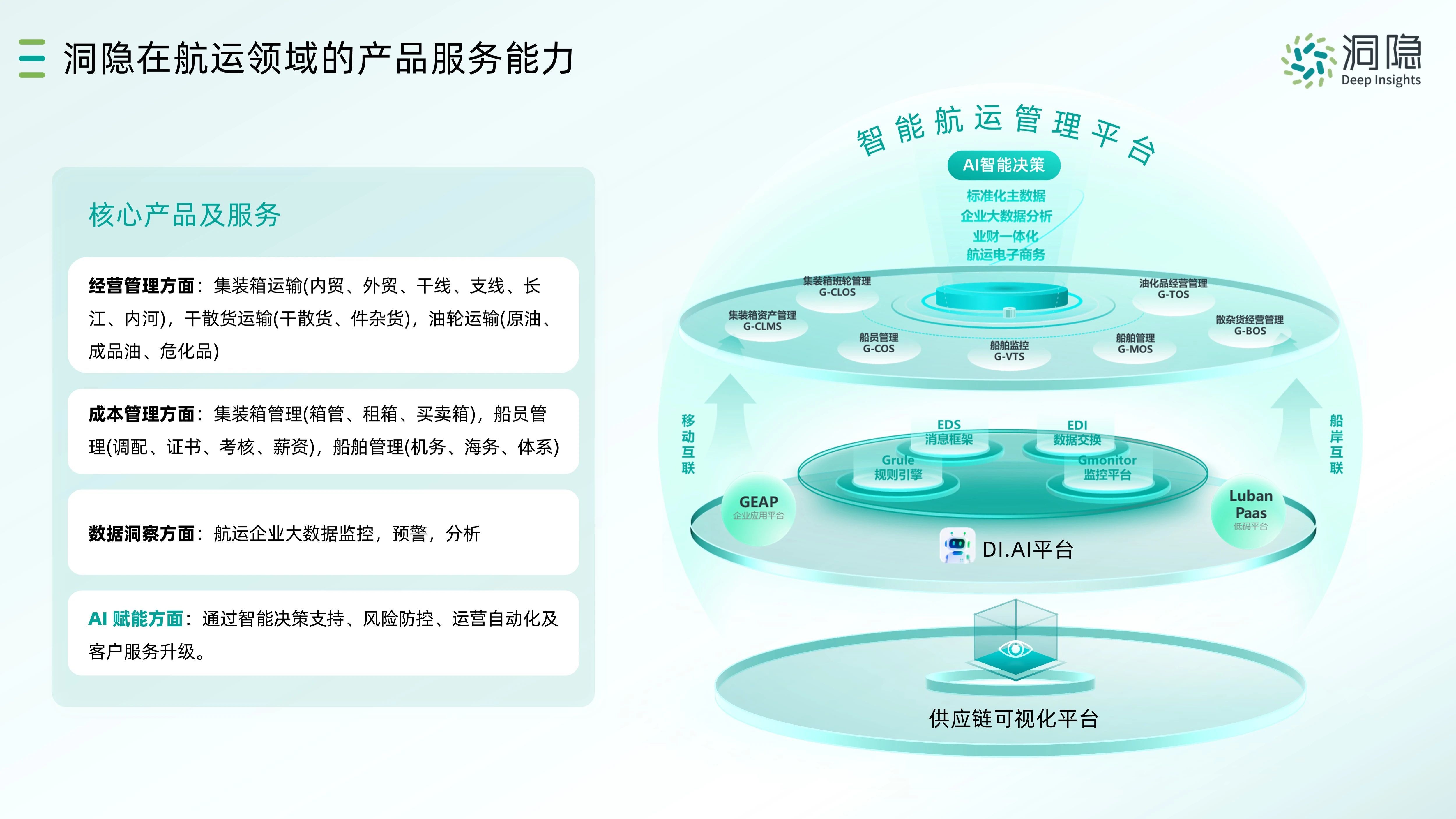
In summary, leveraging its precise understanding of the shipping industry’s critical chokepoints and centering on the standardization of expert knowledge, Dongyin Technology has successfully deployed AI across multiple use cases—including risk management, intelligent customer service, and smart container repositioning—addressing real‑world pain points for shipping lines while demonstrating significant potential in driving the intelligent transformation of customer service.
Looking ahead, as AI continues to penetrate the shipping sector, Dongyin Technology is poised to keep driving operational efficiency and service upgrades, injecting strong momentum into the industry’s move toward intelligent transformation.
Tag:
Related News

undefined
Trying and Experiencing Immediately.

 Products
 Solution
 Resource
 About Us
Sales Hotline
+86-400-107-7860
Address: Room 1201, Urban Construction International Building, 500 Fushan Road, Pudong New Area, Shanghai
E-mail:info@deepinsights.com.cn
Service Line:+86-400-107-7860

Follow Us

Join our community